

Have you ever thought that small tweaks in your saving habits might change your entire future? Picture a tool that reads your current balance and big dreams like a caring friend who just wants to help. This smart retirement tracker lets you play with your contributions, showing you how adding just an extra $50 every month can really add up. It paints a clear picture of your financial future, step by step, so you always know how close you are to a safe and steady retirement. In short, managing your savings is simpler than you think when you’ve got the right tool right by your side.
Interactive Retirement Tracker Tools to Monitor and Plan Your Savings

Picture a digital retirement planner that works like a friendly guide. It asks for simple details like your age, your current savings, your yearly income before taxes, how much you add each month, and what you expect to spend when you retire. This way, you can see where you are now and what you might need to change for a secure future. For example, Mary discovered that adding just an extra $50 a month could put her on track for a better retirement. Small steps really do add up!
This tool calculates two important numbers: what you'll have and what you'll need. It takes into account things like small salary increases, compound interest (where your interest also earns interest), inflation, and expected investment returns. In short, you can play around with the numbers, adjust your contribution rate and see how a little change can make your future more secure.
The dashboard shows your savings progress in real time with helpful visuals like progress bars, clear charts, and trend lines. It’s easy to check if your current savings are meeting your goals.
Plus, its interactive design lets you try different scenarios. If you ever want extra advice, it might even prompt you to connect with a financial advisor. This tracker gives you the confidence to monitor your savings and plan for tomorrow with ease.
Setting Retirement Savings Goals with a Retirement Tracker

A retirement tracker helps you set a savings goal and a retirement age while working out how much money you might need each year. For example, you could aim to save $500,000 by age 65 and see the tracker show you a safe amount to withdraw annually.
This tool comes with an interactive retirement readiness checker that compares your current savings with your target goal. Imagine a progress chart that fills up with every monthly deposit, like watching a plant slowly grow after each watering. As you see that progress bar increase, it tells you that every small step is adding up toward a secure future.
You can tweak your contributions thanks to clear, built-in feedback. If your savings fall short, the tracker suggests bumping up your monthly deposits and even checks your yearly spending against the lifestyle you want after retirement.
- Keep an eye on your annual expenses compared to your plan.
- Stick to the milestones shown and stay on track.
Using Income Projection Calculators and Compound Growth Forecast in Your Retirement Tracker

Have you ever wished you could see your retirement numbers update live? Now you can. When you open your retirement dashboard, the tool instantly pulls in real-time data from your regular job and freelance gigs. You enter your monthly pay, business income, or freelance fees, and it immediately refreshes your pre-tax earnings. It's like watching a progress bar fill up as you enter your details.
There are different screens set up for different types of earnings. One shows your steady salary, while another focuses on your freelance or variable income. This setup lets you easily see how little changes, a small raise here or an extra freelance job there, can boost your long-term savings.
The tool also factors in salary increases, compound interest (that’s when your interest earns even more interest), and inflation adjustments. It then projects how your savings could grow over time, after taxes and inflation are taken out of the picture. Even a slight bump in your earnings can make a big difference over time, and this tool clearly shows you just how much those daily changes add up.
Integrating 401k, Roth, and Pension Data into a Retirement Tracker
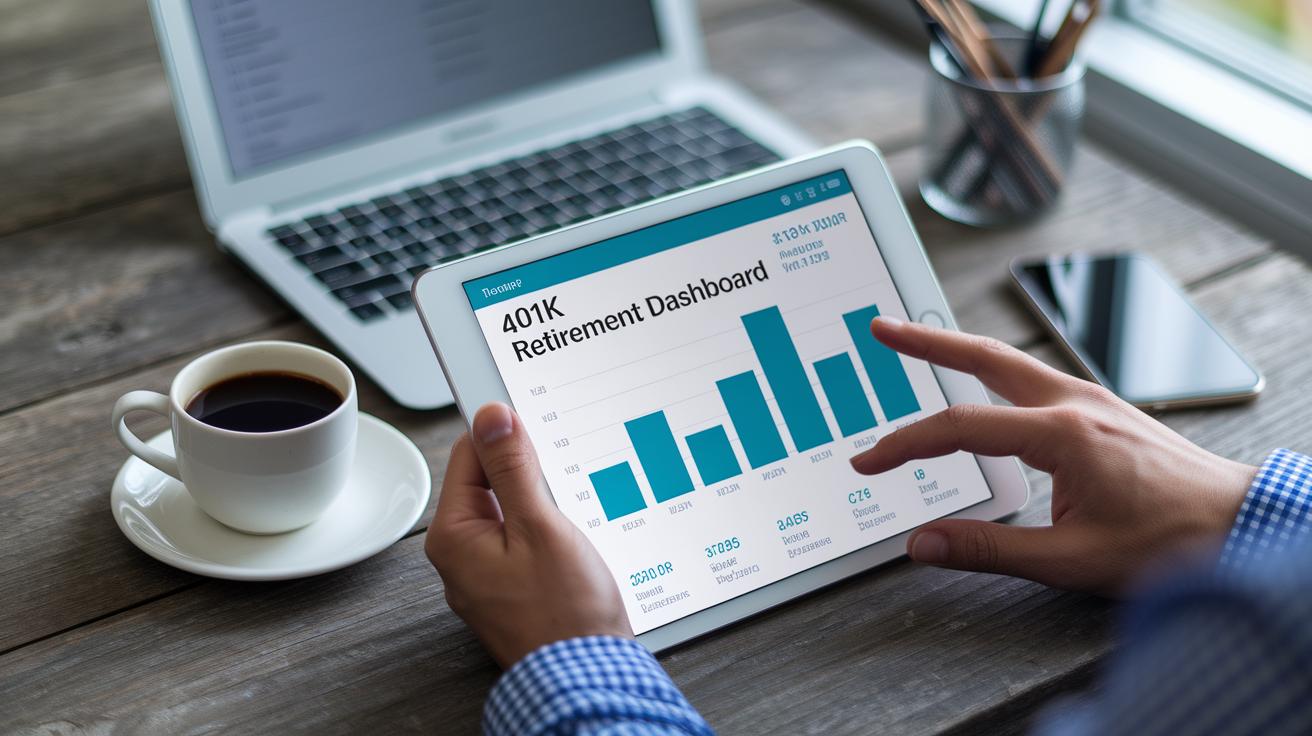
Your retirement tracker brings all your savings together into one clear view. Start by entering your 401k details, your balance, contributions, and any updates. It’s like lining up coins so you can see exactly what you have. I remember the feeling when I first saw my savings organized right there on the screen, it was a real confidence boost.
Then, add your Roth IRA information using the tool built for that purpose. Think of it like logging your steps on a fitness app; every monthly deposit is another step toward a secure future. Have you ever noticed how each little addition builds something solid over time?
After that, plug in your pension data with the pension tracker. This part even helps adjust for Social Security benefits if you include a non-working spouse, which might change the expected amount. It’s simple and clear, giving you another piece of the financial puzzle. For more details on how this all works, check out financial planning retirement.
Finally, remember that this tracker is part of a larger suite that covers credit cards, mortgages, loans, insurance, and investments. Seeing your whole financial picture in one place can truly empower you to take charge of your future.
Visual Progress Charts and Dashboard Features of Retirement Trackers

Interactive dashboards like progress bars, pie charts, and trend lines let you see how your savings stack up against your goals in a snap. A pie chart, for example, breaks down your portfolio into parts, like your 401k, Roth, and other accounts, so you can easily connect your contributions to your overall plan.
Some dashboards even bring a bit of fun by giving you a visual high-five with a little animation when you hit an important milestone. Imagine this: Sarah added her monthly deposit and saw a bright flash on her screen. That surprise was a friendly nudge, showing her that her consistent savings were really making a difference.
Every time you make a deposit, the dashboard refreshes so you can quickly spot any gaps between what you’ve saved and your long-term goals. It’s a simple way to check your numbers against your targets and adjust your strategy if needed.
| Feature | Benefit |
|---|---|
| Interactive Pie Chart | See your portfolio split into clear parts |
| Visual High-Five | Get a fun boost when you reach a milestone |
• Quickly see how your savings compare to your goals.
• Spot deposit gaps so you can fine-tune your plan.
Personalized Retirement Tracker Advice and Next Steps

Your retirement tracker is not just a tool that monitors your savings – it’s a personalized guide to your financial future that offers clear, real-life steps. If it notices that your contributions are a bit low, it might encourage you to adjust your monthly deposits. And if your portfolio is growing, the tracker could hint that trying a new mix of investments might be a good idea. These easy-to-follow suggestions help you quickly check your financial decisions and fine-tune your plan.
Sometimes, the tracker sees areas that need a little extra attention and may even suggest connecting with a financial advisor via links like what is financial advice. This personal touch makes your long-term planning stronger, guiding you toward becoming a confident planner for your legacy. It might even show that a small change in your credit or mortgage strategy can lead to a big difference down the road.
This tracker is also part of a broader set of tools that cover everything from insurance to investments. It gives you straightforward insights based on your goals and current habits. Sharing these recommendations with your advisor can help create a plan that’s just right for you.
- Check your tailored advice on a regular basis.
- Let the tracker steer you in fine-tuning your savings plan.
Comparing Top Retirement Tracker Apps and Digital Planning Platforms

Many apps help you see what your retirement could look like. For example, one popular tracker works a bit like NerdWallet’s calculator. It shows you how your savings are growing, estimates what you might have by age, income, and contributions, and even connects you with financial advisors for extra help.
These tools use simple ideas. They often assume your retirement expenses will be similar to what you spend today and that your savings stay intact, meaning you don’t take money out along the way.
More advanced digital planners go further by using real-life numbers. They adjust for what you actually take home after taxes and factor in a return on your investment after accounting for taxes and inflation. This gives you a more accurate picture of how your money might grow. They also plan that your last deposit is made at the end of the final year just before retiring.
Consider these common traits:
- A clear way to track your monthly contributions and important milestones.
- User-friendly screens that show your progress with charts and progress bars.
- Easy entry of your income, contributions, and account balances all in one view.
- Forecasts that consider things like regular salary increases and inflation.
Some apps even send you alerts when you reach key milestones, cheering you on with every step. These digital tools are designed to be simple and engaging, letting you compare your current savings with what you might need in the future. Their clear look and smart calculations help you feel confident and informed when making saving decisions.
Retirement Tracker FAQs: Answers to Common Questions

Ever wonder why the retirement tracker makes the choices it does? It keeps things simple by assuming you'll spend about the same in retirement as you do now. Think of it like setting your dinner budget, if you plan to use a similar amount later, budgeting becomes much easier.
Another big question is why the tracker doesn’t reduce your savings principal over time. In simple terms, the tracker treats your savings like a steady bank account. You take money out each year, and the rest grows with interest, so your main fund stays intact.
People also ask about using after-tax income for these calculations. That’s because after paying taxes, you know exactly what cash you have to spend, just like when you figure out your monthly budget after bills.
And what about the timing of your last deposit? The tracker assumes you make your final contribution at the end of the year before you retire. So if you’re aiming to retire at 65, your last deposit happens when you’re 64. This little trick helps provide more accurate savings estimates.
| Assumption | Explanation |
|---|---|
| Same Annual Expenses | It keeps the math simple, like using the same dinner budget every day. |
| Savings Remain Untouched | Your principal is treated as a steady, reliable fund. |
| After-Tax Income | This shows the actual money available for your spending. |
These clear explanations aim to answer your questions and help you feel more confident about planning for retirement. Isn't it a relief when things are broken down into simple steps?
Final Words
In the action, you’ve seen how a retirement tracker can turn financial planning into a hands-on, clear process. It shows your savings progress through real-time dashboards and helps set and monitor concrete goals.
Using income projection tools, visual charts, and account integration features makes planning practical and easy to grasp. Personalized advice steps in for extra clarity, making money decisions feel more confident. The retirement tracker is a smart tool to boost your efforts toward long-term wealth and financial confidence.
FAQ
What is a realistic retirement calculator?
The realistic retirement calculator uses your current age, savings, income, and expected spending to project what you’ll have and what you’ll need. It adjusts for factors like inflation and growth to help you plan ahead.
What is a simple retirement calculator?
The simple retirement calculator quickly estimates your future savings. It lets you enter basic details, such as your age and monthly contributions, to offer an easy-to-follow snapshot of your retirement funds.
What is the best retirement calculator and free retirement tracker?
The best retirement calculators and trackers combine easy-to-use features with real-time updates, goal-setting tools, and options to include Social Security and pension data, giving you clear insights to adjust your savings plan.
How do retirement calculators incorporate pension and Social Security?
Retirement calculators incorporate pension and Social Security by adding your benefit details to your savings estimates. They adjust for expected income and inflation so you get a clearer view of your retirement readiness.
How does a retirement calculator work for couples?
A retirement calculator for couples blends both partners’ income, savings, and spending habits. It creates joint projections, helping you see the combined impact on your shared retirement goals and adjust plans accordingly.
What is the $1000 a month rule for retirement?
The $1000 a month rule is a guideline suggesting that retirees might need around $1000 each month to cover basic expenses. It serves as a simple benchmark to evaluate if your savings match your lifestyle needs.
Is $600,000 enough to retire at 70?
Whether $600,000 is enough to retire at 70 depends on your lifestyle, expenses, and care costs. Many people use retirement calculators to compare expected income and spending before making that call.
How many people have $1,000,000 in retirement savings?
A relatively small percentage of retirees reach $1,000,000 in savings. This largely depends on factors like income history, consistent saving habits, and the benefits of compound growth over time.